Thursday, 11 May 2017

Report 10: Reflection


Reflection


Overall, I am pleased with my progress across the module, and I am very satisfied with the piece I have created for my performance assignment. Although it is very different from my performance proposal, I still feel as though I am exploring the themes that I wished to discuss at the start. I would still cite my main source of inspiration as being Steffan Donnelly's "My Body Welsh", as I am also adapting old tales for stage, merging folklore and performance. I feel as though through adapting the tales of Tyno Helig and Cantre'r Gwaelod (and "The Bells of Aberdovey", a song about the tale), both from Sir John Rhys's "Celtic Folklore: Welsh and Manx", making them told from the perspective of the personified sea, I am exploring the ways in which folklore is adapted, and how the meaning of a story lies within the narrator.

In the original tales, the sea floods the kingdoms as a source of supernatural punishment, though in my adaption, the sea unwittingly destroys the land out of curiosity, simply wishing to explore. I intended this to be a metaphor for the ways that stories may be twisted by the teller. History is written by the victors, and I think it is important to consider everyone's perspective before reaching conclusions about someone's personality, as when it comes down to it, you can never define someone else's identity for them. Our identity is our own.
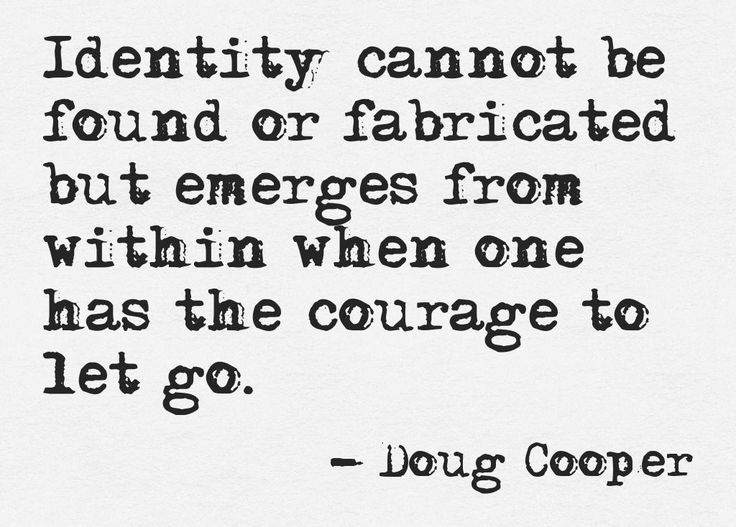

Image result for quotes about identity


I was not only inspired to look further into folklore and mythology due to it's deep connection with cultural and societal identity, as is explored by Steffan and Tara, but because it is so ingrained within my own. Folkloristics is an integral part of anthropology, and as my love of history combined with my love of literature and storytelling, I once again became captured by the stories that excited me as a child. Over the years, I read widely on the subject, and having been able to explore my love of folklore on this blog and through my performance means that for me, I feel as though I will not only be presenting an old, forgotten story when I am on stage, but a large part of my own identity.


Report 9: Rehearsing


Rehearsals


Related image


I was recently lucky enough to see Tom Stoppard’s ‘Rosencrantz and Guildenstern are Dead’ at The Old Vic in London. The play explores existential questions, and the characters constantly discuss matters of identity through their clever use of witty dialogue. An aspect I found particularly intriguing was that the two main characters kept confusing their own names, in the process becoming almost nameless and indistinguishable, which their lost individual lives".
I found this especially intriguing since identity is also the theme of this module. I found the aspects of lack-of-identity to be fascinating, as the narrator of my performance struggles with similar themes as her story is stolen from her, and she laments that she has lost her status as protagonist over time and is forgotten.

I have been focusing on rehearsing my performance this week, making slight alterations to my script where needed. Rehearsing with my group has been important as we have had to work together to determine the transitions between our performances, and how to make all of our technical requirements fit. My favourite song, "What the Water Gave Me" by Florence + The Machine has also been inspiring me recently, especially since the dynamics of the song bring to mind images of water, with cymbals mimicking waves and haunting vocals.


Report 8: Scriptwriting


Scriptwriting


Recently I aimed to focus on writing my script for my performance, which I have now completed, though I feel as though some aspects may change during my rehearsal process. I have stuck with my recent ideas of putting a new spin on an old folktale, especially looking at the ownership of stories and how tales are affected by the narrator, which I explore in my performance. This is also explored by the critic Breece D.J. Pancake, in his "oral narrative / folklore essay", which looks at how similar story structures, archetypal characters and themes are found within folktales globally. He argues that it is the storys narrator that alters it, which is why I am narrating my performance from the perspective of the sea, rather than the tale's original narrator. This modification of tales to fit different societies with different current affairs is explained in Emily Lyle's "Narrative Form and the Structure of Myth", in which she also discusses the impacts of narration upon a story.


Image result for edgar allan poe the city in the sea

I have also been considering my technical requirements. I intend to use many small props in unusual ways, as though to symbolise something else. For example, fairy-lights I will use for the lights of a kingdom and a bowl of water for waves. I have also been reading Edgar Allan Poe's poem "The City In The Sea" which explores many of the same themes as my performance.


Thursday, 4 May 2017

Report 7: Water


Water


This week I have made some rather drastic changes to the path I would like my performance to take. I have decided that instead of presenting fiction as fact in a modern-day setting, that I will simply perform a form of an old folktale, combining storytelling, physical theatre, and monologue. As storytelling is so deeply entwined with cultural and individual identity, I feel as though this shouldn’t render my previous work and research that I have done on the module irrelevant. I continue to use Steffan Donnelly's "My Body Welsh" as my main inspiration. 

I plan to still remain focused on the aspect and presentation of water in mythology. As water is often portrayed in many cultures as a feminine element, and thereby often presented as a symbol of femininity, I think it would be interesting to look into this more, perhaps even exploring the relationship between gender and identity. In an essay by Viola Perente-Čapková, the author states that "in art and literature, women and water are tightly connected", which seems especially true in Celtic mythology. The connection is further explored by Carles-Enric Fernandez in his essay about the legends of the lakes of Wales, in which he makes the point that it seems as though almost all the lakes in Wales have some connection to the Gwragedd Annwn - a fairy race resembling the nymphs of Greek mythology, often believed to represent the old Goddesses of the Celtic pantheon who were later demonised and relegated to the status of "fairies" with the rise of Christianity. I feel as though I would like to research this more, incorporating aspects of such ideas into my piece.

Tuesday, 2 May 2017

Report 6: Presentation


Presentation

I recently presented my current ideas to the class via a powerpoint presentation, in which I explained my proposal for my performance. I explained that I am interested in looking at the relationship between identity and landscape, and then gave a brief overview of the tales of Tyno Helig and Bala Lake, which I am inspired by. I feel as though the presentation went well, although I sadly did not get to explain the stories in as much detail as I would have liked.


We were also recently visited by a theatre company called SigndanceCollective, who gave us a brief preview of their performance, Carthage, which "explores the political, human and cultural impact of language" (Bower). The company is very culturally diverse, and aims to promote inclusive theatre, making theatre more accessible for the disabled. This is something I have not properly encountered before, and I found it inspiring to know that there are people trying to make theatre more inclusive for everyone. I was especially interested by their use of sign-language throughout their performance.

I have also been reading this essay about the relationship between performance and cultural identity, which especially looks at the ways that folklore and mythology are adapted for stage.


· David Bower, "David Bower: About Carthage, David Bower, Artistic Director at the Signdance Collective", http://www.asiw.co.uk/reviews/david-bower-cathage-david-bower-artistic-director-signdance-collective

· Steve Evans, "Drowned Towns and Sunken Cities: The Legend of Lake Bala, Wales", http://folklorethursday.com/regional-folklore/welsh-folklore-legend-drowned-town-beneath-lake-bala/

· W. O. Beeman, “The Anthropology of Theatre and Spectacle” http://mysite.du.edu/~lavita/ExpCult/_Docs/beeman_anthro_theater_spectacle%20copy.pdf